
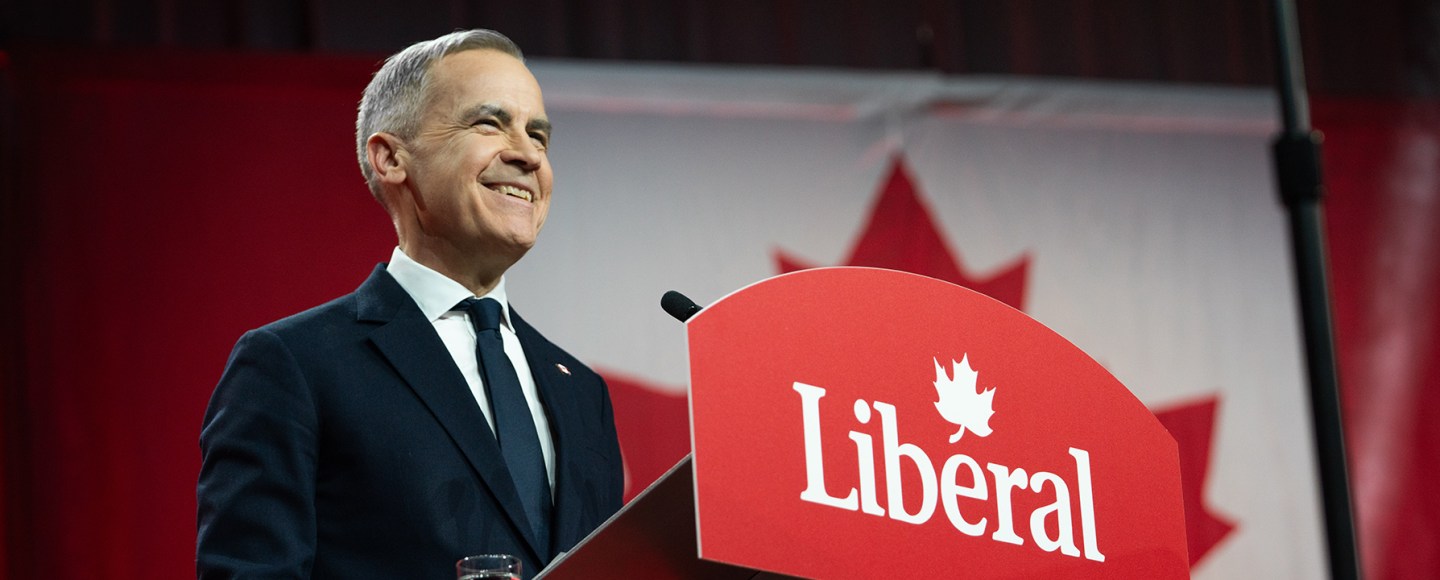

“Unlike Pierre Poilievre, I’ve managed budgets before. I’ve managed economies before. I’ve managed crises before. This is the time for experience, not experiments.” said Mark Carney, Canada’s new Prime Minister.
In January of 2025, Trudeau resigned as Prime Minister. Mark Carney, a determined economist, decided to step into politics and was sworn in as Prime Minister. He was elected on March 9 and officially became Prime Minister five days later with a mandate to weather an economic storm that most recently has focused on tariffs from Canada’s neighbours to the south.
Though he holds a British citizenship from his time in the UK, Carney announced his intent to remove it, so he only holds a Canadian identity. He felt it was the right thing to do when he was elected.
Carney’s plan is to protect Canadians and build safer communities. His motto states, “We will disrupt and dismantle criminal networks, bolster the justice system, and build a stronger and safer Canada for everyone.”
One of Carney’s first actions as Prime Minster is to remove carbon tax, which is a government program that places a price on carbon emissions from producing goods or services. Instead, he plans to place heavy taxes on industries to ease the prices of goods. Carney also wants to implement a “shadow tax” where businesses will apply a hidden tax to increase prices.
Carney has pledged to deal with the tariffs from Trump as well as several domestic issues such as affordable housing, cutting taxes to ease the cost of living, building higher defence, and boosting domestic trade. He also promised to protect and modernize Canada’s healthcare system by adding thousands of new doctors to the system.
“In a crisis, Canadians come together to tackle challenges – because united, we are Canada strong,” he said.
Mark Carney was born in Fort Smith, Northwest Territories, and was raised in Edmonton, Alberta. He grew up in a big family, being the second youngest of four. Like his two brothers, he attended Harvard University and gained an interest in studying literature and math.
However, things shifted when he developed an interest in economics after his lectures with his professor, John Kenneth Galbraith. During his time at Harvard, Carney also received a partial scholarship, which earned him a career in hockey as a goalie for the Harvard Ice Hockey Team. He then earned a Bachelor of Economics from Harvard University.
After his graduation from Harvard, Carney worked at Golden Schans, a global finance firm, to pay off his student loan debt. He started his career working at an office company in London before being transferred to work in Tokyo and New York. He later returned to England’s Oxford University, where he earned a master’s degree in economics. At Oxford, he continued his career and played goalie in the Oxford University Ice Hockey Club and co-captained the team.
Carney’s official government work started in 2003. He applied to become a governor for the Bank of Canada and successfully obtained the position. After thirteen months of being in the position, he became a senior deputy governor in the department of finance.
He was the second-youngest person to reach the top of his job. Carney stepped in to take measures for a financial crisis, which included lowering interest prices that helped stabilize the economy and employment for up to a year.
During Carney’s time as a governor, he received lots of praise and had a high public profile. He received multiple labels and awards, such as “Most Trusted Canadian” from the editors of Reader’s Digest Canada. He was also considered a “rock star” in the banking world.
Carney was named a saviour in finance and was recruited to lead the Bank of England to help them recover from the aftereffects of the global financial crisis in 2013. He became the 120th governor of The Bank of England and the first non-English person to take the lead.
During his time as governor of Bank of England, he spent most of his time introducing his view on a “forward guidance” to help increase interest rates to support the economy.
Carney also wanted to stand against Brexit, which referred to the separation between the EU and England. The EU is a political and economic union that combines 27 states in Europe. They help facilitate goods, services, and people as well as the origin of their currency.
However, it became a struggle for the UK to facilitate most goods as there are increased barriers and disruption of supply chains. Most of the people living in England could not afford the prices of rent and food due to these struggles. They thought that leaving the EU would help them earn more money and better living conditions.
Ever since the 2008 financial crisis, the European Central Bank has not responded to this issue effectively. Carney knew that Brexit would negatively impact the economy, which many of the Brexit activists accused him of making statements that would favour the UK’s membership of the EU. However, he was unable to stop Brexit, knowing that it would lead into a recession and left the Bank of England in 2020.
“I didn’t want to do the Bank of England job. But it was a challenge. The financial system had basically failed.” he said.
By 2021, Carney had left the Bank of England and became head of the Canadian American Brookfield Asset Management and the United Nations, where he was responsible for Climate action and finance. He also became a trustee and member of the G30 and a member of the Foundation Board of the World Economic Forum which are also groups that help support climate change and financial issues. As of today, he continues to support these parties and became the chairman of the G30.
As Prime Minister, Carney has laid out a hopeful vision for Canada.
“Our Liberal plan to make life more affordable will cut your taxes and help Canadians afford a home, access dental care, and secure reliable childcare,” he said. “Our plan will save Canadians thousands of dollars every year and build the fastest growing economy in the G7.”
For now, Canadians seem to approve of Mark Carney as their new Prime Minister. A recent Abacus Data poll found that 51% of Canadians have a positive impression of him while only 27%.
Despite the turbulence on the economic front, Canadians remain optimistic overall.
Image Credit: Liberal Party of Canada
 8forty.ca
0 comments on “Canada’s new Prime Minister is mandated to address economic uncertainty”