
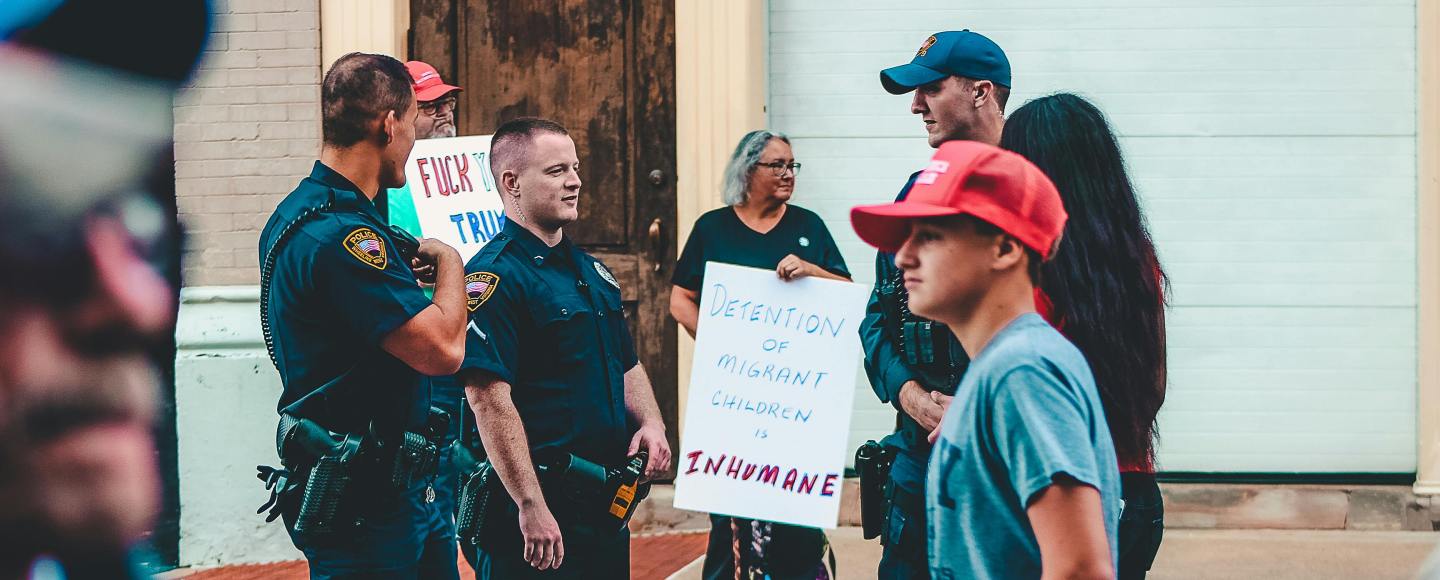

In Vietnamese households across America, the sound of a knock on the door has taken on a new meaning. Some families now draw the blinds tighter at night. Others keep a packed folder of documents near the front door such as passports, birth certificate, or proof of residence just in case.
The fear feels familiar for lots of families. But under President Donald Trump’s revived immigration enforcement policies, it has returned with new intensity.
Since Trump returned to office on January 20, 2025, his administration has moved quickly to tighten immigration control and expand deportation efforts. One of his first executive orders, signed on January 25, expanded the definition of who could be prioritized for deportation and increased cooperation between local police and federal immigration agents. A series of executive orders has broadened the use of expedited removal, limited Temporary Protected Status, and renewed efforts to restrict birthright citizenships for children born in the U.S to noncitizen parents.
According to the Department of Homeland Security Data released in September, more than 160,000 people have been deported since Trump’s inauguration, a 40% increase compared with the same period last year. Supporters say the policies restore order at the border and uphold the law, while critics argue they spread fear among immigrant families who have lived in the U.S for decades.
Among these affected are thousands of Vietnamese Americans, many of whom arrived as refugees or through family reunification years ago. Now they find themselves once again living in uncertainty.
In Seattle, Washington, John Le, 38, said his parents have barely stepped outside in weeks. (Le’s name, like those of all the Vietnamese interviewees in this article, has been changed in order to protect his identity.) Le, who immigrated from Vietnam as a child, said the fear of deportation has become constant in their home. “Last month, ICE showed up in my mom’s neighbourhood at like, five in the morning,” he said. “She ran to hide and hasn’t gone outside much. It’s like jail when you live in your own home.”
Immigration and Customs Enforcement (ICE) is the federal agency responsible for enforcing immigration laws and deporting undocumented immigrants. Over the past few months, reports of early-morning ICE operations have increased in major U.S cities, including Seattle, Dallas, San Jose, and many more, prompting immigrants to avoid public spaces and limit social activities.
Le said he constantly worries about his parents’ safety. “I can’t sleep sometimes,” he said. “I came here as a kid believing this was a free country. Now, it feels like we’re back to hiding.”
In Dallas, Texas, Grace Tran, 27, studies political science while helping her family navigate immigration paperwork. Born in Texas to Vietnamese parents who came on work visas, she said the recent policy changes have shaken her sense of security.
“The birthright citizenship issue really scared us,” Tran said. “My parents thought that being born here made me safe. Now, they aren’t sure anymore.”
Tran said her cousin’s asylum interview was abruptly canceled earlier this year after the government implemented a new restriction requiring proof of third-country asylum denial, a policy that disqualified many Southeast Asian migrants seeking protection. “He walked for days to reach the border, got an appointment through the app, and then it disappeared… he doesn’t know what to do next.”
In San Jose, California, David Pham, 58, runs a small Vietnamese restaurant with his wife. He said the recent immigration raids in the Bay Area hurt his business and frightened both workers and customers.
“One of my employees was taken during an ICE raid near the restaurant,” Pham said. “After that, almost half of my staff didn’t show up for a week. They were scared to be seen.”
Pham told 8forty that he’s seen longtime patrons disappear and neighbors avoiding public places. “People are staying home, skipping church, avoiding hospitals,” he said. “We aren’t criminals, we’re just trying to live our lives you know?”
Immigrant advocates say that kind of fear is widespread. The stepped-up enforcement has led many families to withdraw from public life, eroding trust in schools, health systems, and even local police. For Vietnamese immigrants, many of whom arrived as refugees after the Vietnam War, the atmosphere recalls earlier decades of legal uncertainty and anxiety.
Still, the families interviewed expressed resilience and hope. Tran said her parents remain grateful for the opportunity they found in the United States. Le said his only wish is for his parents to “live without always looking over their shoulders.” Pham also added that “we just want peace. Let families live without fear.”
For families like Le’s, Tran’s, and Pham’s, those decisions are not political abstractions, they are daily realities that shape their sense of safety, belonging, and home.
Cover image: Rosemary Ketchum from Pexels
 8forty.ca
0 comments on “Vietnamese families confront renewed fear under Donald Trump’s immigration crackdown”