
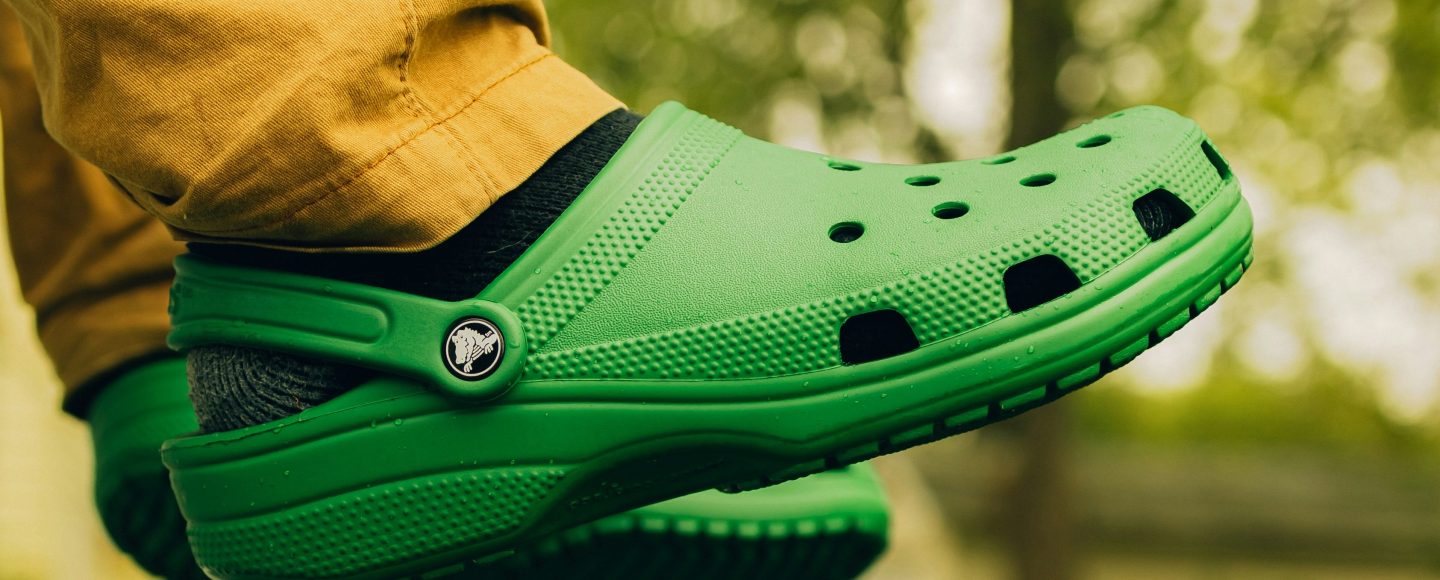

They were listed as one of the 50 worst inventions ever.
“It doesn’t matter how popular they are. They’re ugly,” stated Time Magazine.
“I hate crocs, may they please go away,” said Tim Gunn.
Crocs may be the most successful shoe brand that has more diehard haters than fans. Worn by celebrities from John Cena to Justin Bieber, it seems the clog is always in our peripheral, whether we like it or not.
Surprisingly for a shoe so popular, the main words that corresponds with the brand are ugly, childish, and tacky. A popular choice for little kids, dads at the park, and people who care more about comfort than appearance. Many nurses who are on their feet for up to twelve hours swear by the foamy clogs because they are undeniably comfy.
In 2000, Scott Seamans was working at a failing company where he was trying to redesign the Dutch clog. Seamans, an avid sailor, was inspired by how well the shoe could function for boating. Searching for similar shoes he came across a clog created by Canadian manufacturer Foam Creations.
On a boat trip with his friends, Lyndon Hanson and George Boedecker, Seamans showed off the clog he had acquired from Foam Creations, to which he had added personal additions like a heel strap. The shoe was lacking in the looks department, but the Crocs shined in utility. The trio purchased the design rights and got to work on their vision for the perfect clog: one that was lightweight, cushioned, waterproof, ergonomic, and sustainable.
Eventually in 2002 the friends decided to hit the market with their utilitarian rubber clog, and it quickly gained traction, not only with boaters but with anyone as everyday shoes. The Crocs were so comfortable that people could throw them on as slippers. The Crocs brand saw this potential and quickly expanded to the broader consumer base. In 2005 Crocs launched the first national advertising campaign, “Ugly Can Be Beautiful.” It poked fun at how ugly and off- putting the Crocs seemed, but it solidified the unique silhouette was here to stay.
From the beginning, the shoes were punchline. In the 2006 cult classic movie Idiocracy they are the shoes worn by everyone in a crass dumbed-down future. The Crocs were found by the costume designer who said, “Those are great, just stupid plastic shoes.” Director Mike Judge thought they were perfect for the film because they were too ugly to ever become popular in real life. Well, Mike Judge was clearly wrong. By the time the film was released, the shoes had made 6 million in sales. Success was an understatement.
With how fast the material could be pumped and dumped out of the molds, Crocs could match the high demand quickly, and luckily for the brand it seemed the hype kept on growing. CEO Andrew Rees said the brand exploits the constant chatter as publicity, publicity that the brand could never afford in marketing. It made Crocs brand a household name.
Whether you liked it or not, by the late 2000’s it seemed everyone was rocking a pair of crocs.
A big reason why the company was so successful was the acquisition of the Jibbitz brand, which was a family-owned company built on customizing the Crocs with charms. These charms were fitted onto the top holes of the clog, and they had limitless possibilities with brand collaborations. It turned the Crocs from a comfortable utility shoe to a personalized extension of oneself; that kids especially connected to. The company was bought for 10 million USD with the promise of another 10 million. Now there are Crocs for millennial moms and Fortnite- addicted kids alike.
The Crocs became a mainstay, but the attention that they captivated slowly died out, after all even crocodiles can get stuck in the mud. Then, the 2008 financial crisis hit the Crocs brand especially hard, and the company was at an all-time low. The company shrank in numbers and there was no innovation in the shoe. It seemed Crocs were fading and were going to become just another fad such as Beanie Babies or Pet Rocks. Was this the end of the Crocs Brand?
For years it seemed like it. Nearing bankruptcy, and with people uninterested and moving on, the brand knew it needed to make a change. Well, it wasn’t a change with the brand that brought Crocs back; it was a change in the world.
The covid 19 pandemic flipped just about everything in the world. People were quarantined at home with jammies and corny t-shirts. No one cared because this was reality. There was no need to dress up for a day of watching Netflix and hopping on zoom with the family. In fashion, comfort was king. As Crocs’ sales seemed to rise from the grave, the Crocs made two key decisions to run with the current hype.
They focused on the classic clog, the one that started it all. During the early 2010’s the company had strayed away from the classic design, getting crazy and creative with silhouettes, like Croc boots and fur lined Crocs, but this simply didn’t work. It lost the spirit and the simplicity of what made Crocs popular in the first place. So, they started back at square one, improving every aspect of the original clog, building quality, shape, and heel strap. The term “sport mode” became popular, describing the heel strap being pulled down.
Secondly, the brand and celebrity collaborations made everyone aware of Crocs. Justin Bieber was spotted rocking some Crocs with clout goggles and Starbucks in hand; this was the epitome of what everyone wanted to be. These paparazzi and Instagram photos exploded the publicity of the shoe, later they capitalized on Justin Bieber’s fame by creating special “Drew House” Crocs–, Justin Biebers clothing brand that had a grip on Gen Z in the early 2020’s. Other musicians like Bad Bunny and Post Malone had their own collaborations, that garnered equal attention. On the aftermarket these collab Crocs are going for well over a hundred dollars.
The Crocs brand focused on going globally. They marketed with campaigns like “Ugly can be Beautiful” and exclusive luxury Balenciaga Crocs. It all culminated in 2024 with the highest revenue in company history: one billion dollars.
Today you can’t go to a park, community center, or an open gym without seeing a pair of crocs, and the brand shows no signs of slowing down. Expanding with collaborations on popular IP like NFL, Animal Crossing, Bape, and later this year Stranger Things shows crocs can reach all audiences. 4.13 billion dollars in sales later; it’s safe to say Crocs are here to stay.
Back on that boat in Boulder Colorado, Seamans took out the first pair of crocs, stylish? Absolutely not, but it was the start of something big that none of the friends could predict. This original clog would remain unchanged for a decade as it stood in a realm of its own in the world of footwear. The world of street fashion seems to have learned a new trick: the ugly factor can be monetized, and you can achieve massive success with a self-deprecating joke.
Cover Image: Bruno Guerrero/Unsplash
 8forty.ca
So informative!!! I love crocs!!!
LikeLike