
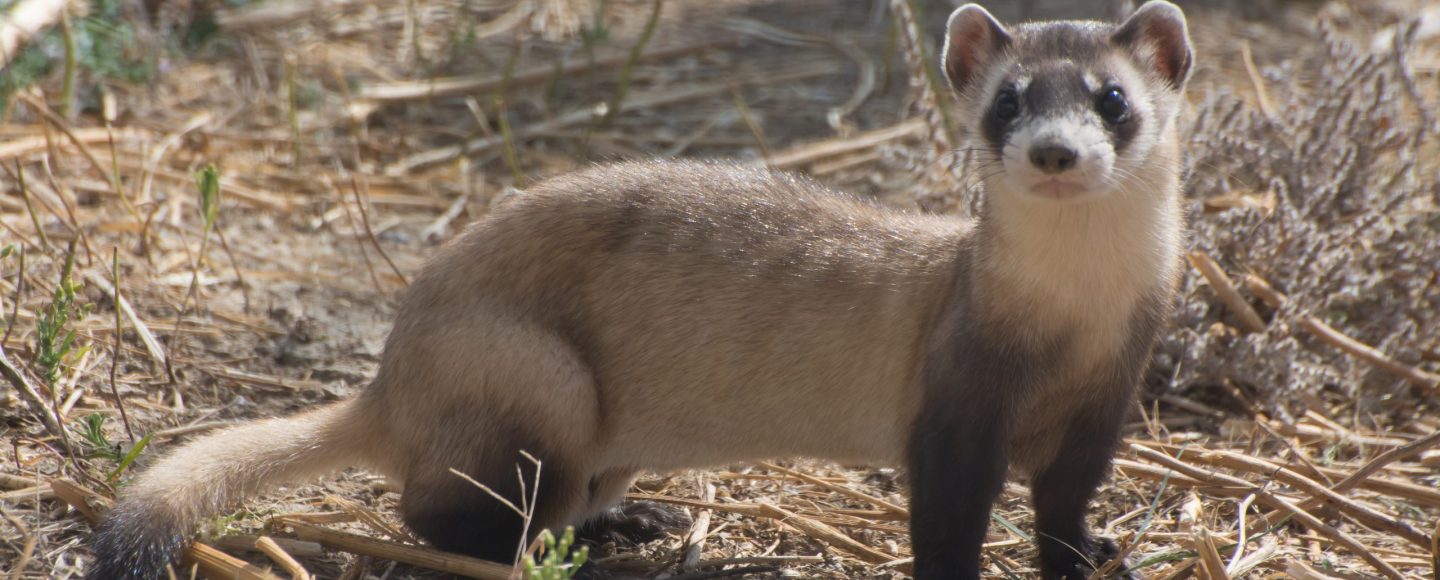

Once darting through vast grasslands in search of prairie dogs, the species of black-footed ferret now faces an uncertain future with its home and prey vanishing rapidly.
Originally believed to be extinct, the black-footed ferret was rediscovered in Wyoming around 1981 when a rancher’s dog brought home a ferret, leading wildlife officials to a small surviving population.
Black-footed ferrets became endangered because their habitats were destroyed, and their main food source, prairie dogs, was nearly wiped out by disease and human extermination. Since prairie dogs make up about 90% of the ferrets’ diet and provide shelter through their burrows, the loss of prairie dogs has pushed black-footed ferrets to the brink of extinction.
Their population is also threated by the spread of sylvatic plague, which threatens both ferrets and prairie dogs.
To protect them, scientists have developed captive breeding programs in zoos and conservation centers, which form the foundation of their recovery. Biologists also vaccinate ferrets and prairie dogs to help them resist the deadly disease.
Numerous of dedicated researchers and biologists have been working together under the Black-Footed Ferret Recovery Implementation Team (BFFRIT), which is led by the U.S. Fish and Wildlife Service (USFWS). In partnership with the Department of Defense Legacy Program, a black-footed ferret pre-conditioning facility was built. Pre-conditioning pens are located outdoors and are surrounded by a prairie dog colony. The facility was created to allow black-footed ferrets experience the sense of being in the wild, while maintaining a minimal risk to possible threats. Ferrets practice their skills in these pens that they will need to survive in the wild, like learning to hunt prairie dogs and use their burrows as shelter. After pre-conditioning, young ferrets are taken to one of the several wild release sites they have set up to adapt more to the wild. This program allows black-footed ferrets to be carefully watched over while slowly adapting to their natural habitat as well.
Kristy Bly, a manager at the World Wildlife Fund’s (WWF) Northern Great Plans Programs says, “In order to achieve recovery, we need to monitor their populations, we need to protect both prey dogs and ferrets from plague.” As a way of protecting their population, a group of WWF’s team searches wild sites using thermal cameras to search for ferrets, if they find a ferret without an ID or vaccination, when found they are then taken in to get a vaccination for the sylvatic plague and a microchip so they can monitor the ferret.
Black-footed ferrets live in the prairie grasslands across the Great Plains, and long ago their range stretched from southern Canada all the way to northern Mexico. They’re one of the rarest mammals in North America and belong to the Mustelidae family. You can spot them by their black face mask, black feet, and black-tipped tail, while the rest of their fur is a light beige-yellow that fades to even lighter shades on their stomach, forehead, muzzle, and throat. This coloring isn’t just for looks—it helps them blend into the grasslands and stay hidden from their prey. Black-footed ferrets have short legs and strong front paws with digging claws, plus large eyes and ears that give them great vision and hearing for hunting. As adults, they usually measure about 18 to 24 inches long and weigh between 1.5 and 2.5 pounds.
Black-footed ferrets are also playful and vocal animals. They bark, chatter, and even chuckle, and their characteristic “ferret dance” involves hopping around with open mouths. These behaviors make them energetic and engaging creatures to observe.
With continued conservation efforts, protected habitats, and public awareness, there is still hope for their survival. Their comeback story is far from complete, but it serves as a powerful reminder that even when nature seems lost, recovery is possible.
Cover Image: Abeline ZOO
 8forty.ca
0 comments on “Black-footed ferrets close to facing extinction, while scientists work to save their species. ”