
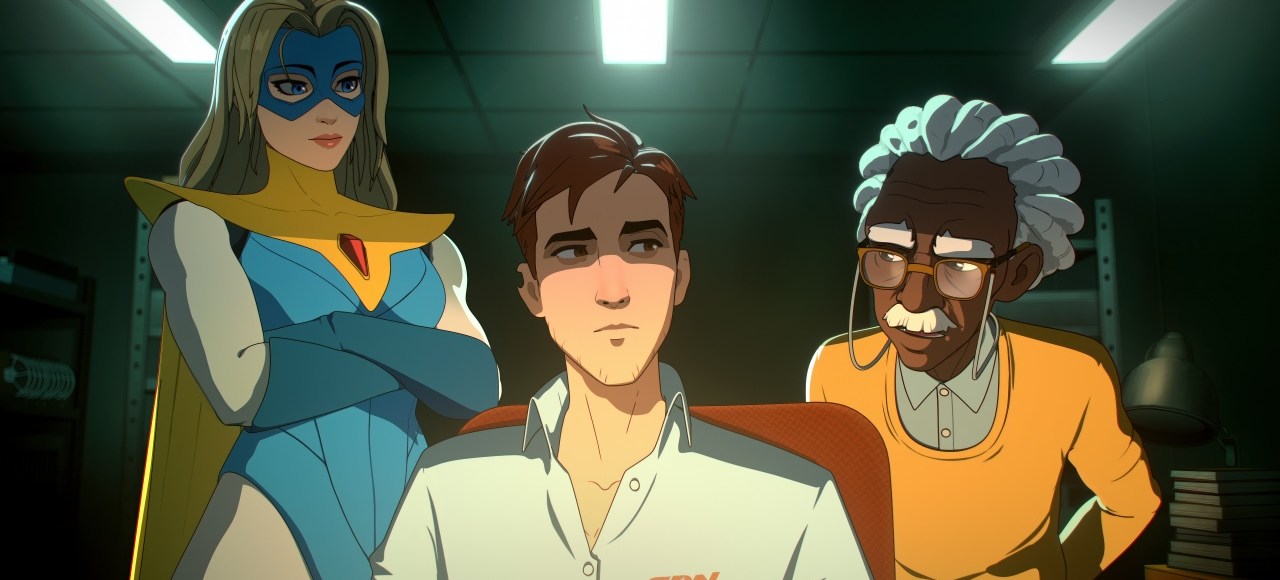

A hundred choices to make that all impact the game, six different endings, and one of the most relatable protagonist’s players can pilot. Dispatch changes the landscape of video games, and revitalizes a genre once thought dead.
Dispatch is an episodic video game that debuted between October and November 2025 with a weekly release of two episodes. You play as the apathetic, brutally honest and sarcastic Robert Robertson, who, in a moment of desperation, becomes a superhero dispatch agent, responsible for managing and sending out a team of ragtag villains attempting to reform. However, the immaturity and volatile nature of this group constantly complicate Robert’s job. Players take on a multitude of decisions range from revealing your identity to romancing your coworkers, all of which add to the complexity of the world.
What makes Dispatch unique is that it does not just feel like a vehicle to have fun; it tells a story where players genuinely connect to its characters. Through interactive dialogue, relationships can grow closer with some characters while creating tension with others, causing each player’s inner circle to vary drastically. The characters are believable and engage in natural, realistic conversations. The one-dimensional brute villain is of the past, replaced with endearing characters driven by motivations that go beyond simple ideas of good and bad.
But most importantly the game is extremely funny. It’s a workplace comedy where relatable day-to-day operations are shaken up by superhero tasks, with constant quips that keep the mood always light and enjoyable. The humor often comes from juxtaposing mundane and serious, such as: “Bank robbery in progress… also, someone’s cat is stuck on a very tall, very real tree. Priorities, people!”
Robertson has a dry sense of humour and witty responses that match what the gamer is thinking in the crazy situations. Other characters that fit classic cliches like the rebel, the gentle giant and the rogue with a heart of gold are subverted in comedic and fresh ways.
A core aspect of the game is Dispatching. The missions involve the Superhero Dispatch Network subscribers calling in seeking help from small to large situations. It’s the players job to send out the best suited hero and handle all the calls. Although basic in nature, the pressure of multiple calls at once and having a finite number of heroes all make it a fun experience.
The main character Robertson is the perfect choice for this game. On the surface, he’s nonchalant and never loses his temper, but beneath that exterior he’s a hero who values the well-being of others more than his own. The glamour of hero life is non-existent for Robertson; he lives alone with no surviving family, and his life is consumed by his duty to protect people. He comes from wealth but has lost it over time, spending his resources repairing his suit and being a hero, a clear reflection of his selflessness and dedication to responsibility.
A very popular part of the game is the romance options, there are two choices, Blonde Blazer (Mandy) a well renowned hero, who employs Robertson in the first place. She has a heart of gold and a classic beauty that many players choose. On the contrary is Invisigal (Courtney) a defiant former criminal whose violent tendencies come from the belief that her powers could only be used for evil. She is brash and has zero filter but ends up falling for her boss Robertson. It is your choice to pursue either or none of them.
The reason the characters feel so real is the spectacular voice acting. Aaron Paul and Jeffery Wright, both well-known actors, completely embody their characters. Even with recognizable voices, you do not hear Jesse Pinkman; you hear Robert Robertson and the trauma and complexity he carries. The dramatic scenes are elevated by the raw emotion and intensity in each delivery.
When many came across the game, the first thing they thought about was the cautionary story of Telltale Games—a previous player in this genre that failed. Telltale games was an American studio known for popularizing choice-based games like the Wolf Among Us, Batman and The Walking Dead. Telltale rose through licensed franchises such as Back to the Future, Jurassic Park, and Game of Thrones, but eventually collapsed due to quantity over quality and over-reliance on licensed properties.
Ad Hoc Studios the developer behind Dispatch is comprised of many former Telltale Games employees. With one game under their belt being a smash hit it showed the growth of the company. They started from square one with an original story, stripping away the fluff that diluted previous titles. By investing in plot, graphics and voice acting, they created something built originally rather than relying on nostalgia or pre-existing fanbases.
A Dispatch Season 2 is looking very likely, with developers at Ad Hoc Studio acknowledging its strong possibility due to massive player success, and star Aaron Paul also expressing interest in returning for future seasons. It is safe to say that there is a real fanbase for the game. Ongoing discussions around the canon ending, and player choices have kept conversation flowing well beyond release.
Dispatch has made an impact in the gaming world, revitalizing a genre once thought dead. It stands as a major win for indie developers, challenging the regurgitated triple-A slop many players have grown accustomed to. By demonstrating the importance of a fully realized vision, the game spent seven years in a turbulent development cycle ultimately proved to be worth the wait.
Image Credit: AdHoc Studios
 8forty.ca
0 comments on “Dispatch delivers a distinct dialogue driven experience”