
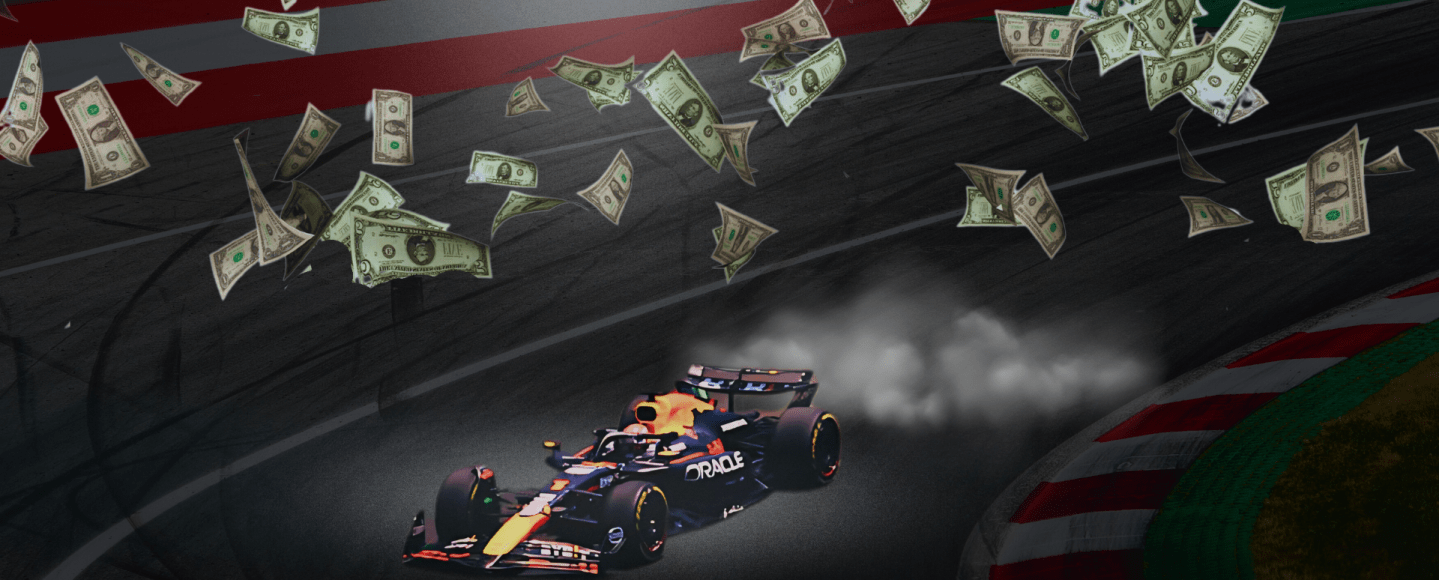

Formula 1’s slogan, “We race as one,” promotes unity, progress and inclusion. Their initiative under the slogan’s name promises to tackle significant issues facing communities, including inequality. But when the sport’s most prominent investors are governments accused of silencing voices and restricting freedom, many argue that their message falls empty.
Formula 1 is associated with speed, luxury, and cutting-edge technology. But behind the glamour and roaring engines, the sport has become a powerful tool for sportswashing, where governments use large racing events to improve their reputation and divert attention from human rights abuses, political controversies, or corruption.
With its global popularity and high-profile audience, F1 has become an appealing platform for governments looking to reshape their image and public perception, but the sportswashing’s growing power is raising concerns about its impact on the sport.
Formula 1 has a long rich history of competition, innovation, and community. At each race, fireworks light up the night, engines roar, and the world watches as speed and precision blur into a spectacle of sport. As new fans connect to the sport, the history of Formula 1 and its racetracks are monuments of history that unite a sports community through legendary moments that forged champions.
Yet in recent years, the Grand Prix race schedule has been shifting. Historic circuits are disappearing, while long standing tracks like Zandvoort in the Netherlands are nearing their demise.
Grade 11 student Isabella Moore, a passionate Formula 1 fan who got into the sport in 2024 says, “When I watch races of some of these racetracks that have so much history tied to them, it makes me enjoy the sport more… I prefer watching them instead of the new places because of that.”
Meanwhile, new additions in Saudi Arabia, Bahrain, Qatar, and Azerbaijan have received both excitement and concern. With the outreach, they offer international growth but also raise questions about human rights and political influence.
Saudi Arabia reportedly pays $55 million a year to host their race, a large sum of money, but small in comparison to their large oil-based economy. Backed by a sovereign wealth fund worth more than $400 billion USD, the country has hosted various large sporting events, such as the 2023 FIFA Club World Cup, the FIBA 3×3 World Tour, and Formula 1 races.
Grant Liberty, a UK based organization made up of activists that fight for human rights worldwide, says that this marks a shift in global sports culture, saying “Previously, sports figures and brands had rejected offers to engage with Saudi Arabia due to its well-documented human rights abuses… However, there has been a worrisome shift in moral stance, as lucrative deals are now being accepted despite the ongoing and deteriorating violations.”
The Freedom House, which serves as a non-profit organization known for its advocacy for democracy, political freedom and human rights says, “Saudi Arabia’s absolute monarchy restricts almost all political rights and civil liberties. No officials at the national level are elected… Women and members of religious minority groups face extensive discrimination in law and in practice. Working conditions for the large expatriate labor force are often exploitative.”
The organization gives Saudi Arabia an overall score of 9/100 on “Freedom in the World”, deeming it a “Not Free” country. In contrast, Canada receives 97/100, and the USA earns 84/100.
Some recent examples of human rights injustices in the Saudi region include a man who was sentenced to death for his social media posts under a counterterrorism law, and border guards who killed hundreds of Ethiopian migrants and asylum seekers at the country’s border.
Because of this treatment, 27 non-governmental organizations focused on human rights have accused Formula 1 of “actively displaying a strong double standard and promoting sportswashing.” Meanwhile, Amnesty International’s CEO Sacha Deshmukh says to her the proof is clear, and that “It’s no secret that rich countries in the Middle East see top-level sport as a means to rebrand and sportswash their images.”
This pattern isn’t unique. Other race hosts have faced similar accusations of using F1’s global spotlight to shift attention away from their human rights records.
Bahrain has recently reinforced its connection to the McLaren Formula 1 team, which was founded in 1963 and has a rich history of champions and heritage in the sport. Over the past two decades, Sakhir has been a regular host of F1 races, and in 2024, the Bahraini Mumtalakat sovereign wealth fund purchased the team, marking a new chapter in the history books.
That same year, Mclaren won their first constructors’ championship since 1998. In celebration, Bahrain’s landmarks and buildings lit up in a glow of the team’s signature “papaya” orange colour, while the crown prince attended the final race to witness this historic victory.
According to F1 photographer Kym Illman who observed the festivities, the team was invited to celebrate with the Bahrain royal family, and mobile phones across the country buzzed with a celebration message, reinforcing the ties between the team and nation.
Yet, while the Bahraini government demonstrates its new influence in motorsport, Amnesty International reports on their political reality that raises concerns, including the torture and beating of political prisoners, and exploitative working conditions with little to no rights. Elections of lower parliament are not competitive or inclusive, and they continue to eliminate opposition that has been heightened during the Grand Prix season, especially in the case of Bahraini citizen Moosa Satrawi.
In 2004, 22-year-old Moosa Satrawi and a group of local workers began a protest against the governments use of migrant workers for construction for the Bahrain Grand Prix with signs saying, “We are Bahraini and we are looking for a job.” The group faced beatings, threats against their families, and sexual assault. The next year they returned, this time met with tear gas and rubber bullets after they had been seen by Formula 1 bosses.
Now living in the UK after being granted asylum, Satrawi continues to campaign. “The Grand Prix helps them,” he said, on the persecution exercised by authorities in Bahrain. “It helps them do this.”
Sporting events may prove to be an effective way to improve a nation’s image. University of Manchester professor Dr Vitaly Kazakov says, “People (fans) are very keenly aware of the many problematic issues surrounding sporting events… Yet, because of the ‘feel good factor’ which surrounds sporting events like football tournaments (And Formula 1 races), sporting events can still achieve the envisioned political goals of illiberal host states.” He continues to add that fans who attended the major sports events in a foreign country departed with good impressions of the host country, despite the knowledge of current inadequate human rights, such as aggressive foreign policies, a lack of LGBTQ+ rights and harsh political persecution.
Some politicians have also spoken out, including former UK Shadow Chancellor John McDonnell who said, “The presence of F1 gives the impression that Bahrain (And similar countries) is somehow a normal state. Its abuse of human rights means it certainly isn’t. No sport should be providing this regime with any credibility.”
While governments use Formula 1 to improve their public image and hide experiences such as that of Satrawi, some drivers have used their platform to push back against injustice.
Lewis Hamilton has spoken out in favor of LGBTQ+ rights and other social issues, notably wearing a pride flag helmet in the Qatar Grand Prix, protesting the country’s position on homosexuality. Following the demonstration that drew much attention, Hamilton said it was a nerve-wracking experience, but necessary to continue to work on inclusivity.
Qatari civilians who are gay experience legal persecution and violence, and under the law, sentences can include a possible maximum penalty of death.
Dr. Nasar Mohamed, the first Qatari to come out as gay, established the Alwan Foundation to support LGBTQ+ rights in the Middle East. He told Time Magazine, “The more feminine you are, and poorer you are, the more severely persecuted. (Torture) exists, but also state-mandated conversion therapy, this is a huge thing. And then there is just like a complete lack of protections for us.”
In addition to current racers advocating for change, four-time champion Sebastian Vettel did so before retiring in 2022. Along with his post-racing advocacy work around climate change, he is known for using his platform to promote social justice. When asked about human rights issues in Formula 1, he said “At some point you need to ask your question, and people in charge need to ask themselves the question: do you have a moral?”
While there are concerns about the ethics and morals of certain countries hosting races, some argue that it opens the sport to new possibilities in terms of racing tracks, diversifying culture, and new sports communities.
Sergio Perez, who raced from 2011-2024 embraces the change, saying “I think Formula 1 itself, it’s a great platform that gives an opportunity to new countries to expose yourself… So I think that’s really, really good. It’s a very nice opportunity for all these new countries that are coming into the sport. And I think as a product we are very unique.”
According to the Wesleyan University business review, hosting races also brings economic benefits to the nation, as increased tourism, job growth, and international exposure contribute to its wealth.
These two factors are something that advocates, including drivers, are advocating to balance: a way to promote diversity and bring the sport to new places while being aware of the potential human rights issues that plague certain countries. Sebastian Vettel expands on this, saying that drivers need to take action, but in a tactful way. He adds “By racing in those countries (ones with poor human rights) and politely, but firmly, standing up for what’s important we can have a positive impact. Values and principles can’t stop at borders.”
After multiple calls to action, the FIA (International Automobile Federation in English) which serves as the Formula 1 governing body for rules and regulations responded to the concerns, announcing that “We take our responsibilities very seriously and have made our position on human rights and other issues clear to all our partners and host countries, who commit to respect human rights in the way their events are hosted and delivered.”
However, in 2023, they updated their International Sporting Code to include a clause that required permission from the FIA for drivers to make or display political, religious and personal statements or comments.
The action drew criticism from the aforementioned Lewis Hamilton, as well as Lando Norris who gives his strong opinion against the rule, asserting “We’re not in a school… We shouldn’t have to ask about everything and say ‘can we do this, can we do that?’ I think we’re grown up enough to try and make smart decisions.”
While the sport may be driven by passion and competition, it also reveals a deep-rooted intersection of power, money, and perception management. As nations continue to use Formula 1 to shape their images, the tensions between competition and moral responsibility may only grow.
This complex relationship between drivers, the sport’s politics, and the influence of nations behind the scenes is highlighted by a comment made by Max Verstappen. Known for his straightforward no-nonsense statements, when asked about sportswashing, he made it clear that he has no interest in engaging in the political side of racing and wants to avoid the controversial topic. The 4-time champion frankly stated, “I am not a politician”.
Cover Image: Sarah Taylor
 8forty.ca
0 comments on “How Formula 1 is helping nations race to mask human rights abuses ”