
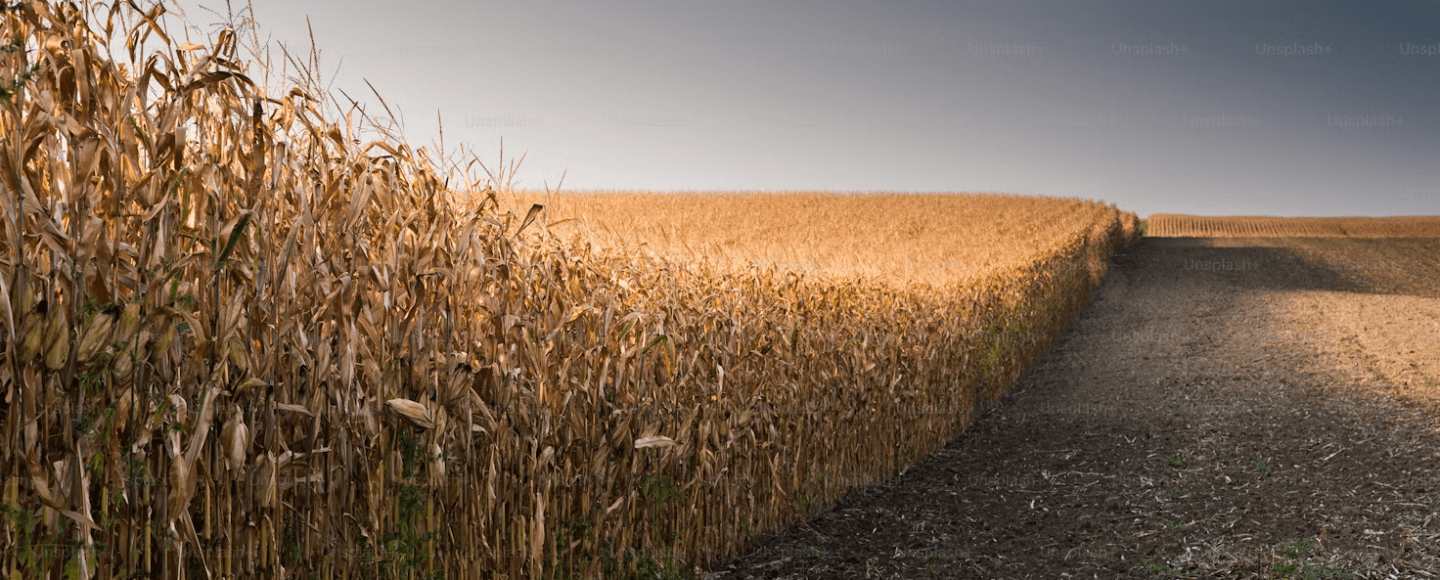

A new study published by the Institute of Physics says that around half of the crops grown in the Western Hemisphere aren’t eaten by people, instead they’re processed into animal mash, biofuels, and whatever mysterious corn-adjacent substance a Dorito is made from. This inefficiency has wide-ranging environmental and humanitarian concerns.
The population of Earth is growing rapidly, and the current mode of agricultural production is not optimized for maximum human-edible calories per acre of farmland. About 70% of the growth in calorie production over the last few years is not being fed to humans, but is rather being used up as livestock feed and nonfood uses, such as biofuels. In 2020, only half of our total agricultural production was consumed by people.
The new study written by researchers from the University of Minnesota, explores the negative consequences of our global fixation on producing vast amounts of calories that nobody eats.
For example, the U.S.A accounts for about 30% of global soybean production, growing 118 million tonnes of soybeans in the year 2024. This is not because American cuisine needs vast amounts of soy for the typical meal, but rather because every year the chicken population of America alone eats 20.2 million metric tons of the stuff. Soybeans are also converted into biofuels in large amounts, meaning that only a tiny portion of the agricultural output of several corn-belt states is consumed directly by humans.
The U.S, China, India, Brazil, and the EU accounted for around half of global calorie production in 2020. Global production increased by a full quarter over the decade, but this increase was not distributed evenly, with the U.S undergoing an approximately 15% increase and Brazil undergoing an approximately 45% increase.
The raw data might mislead some to believe that those countries were producing more food for people to eat. However, all countries, rich Westernized ones especially, use a significant portion of their calorie production for nonfood uses, as shown below.
These statistics show clearly that around half of the water, viable cropland, and human labor used in producing food ends up either fed to animals or burned for biofuels, which form the majority of the nonfood usage for crops.
In addition, the caloric output from feeding animals is positively minuscule compared to the amount of plant matter fed into them, as shown by this next graph:
Animals consume orders of magnitude more food than what we get back by killing them. With the possible exception of milk cows, our farms would become orders of magnitude more efficient by cutting out the middleman and simply feeding people the crops they produce.
And the inefficiencies of feeding animals aren’t the only problem with meat. Modern industrialized agriculture isn’t an environmentally-friendly process. For example, in the Southern U.S, vast amounts of scarce water are used to grow alfalfa, a highly water intensive crop that is inedible for humans. Because of how American water rights work, (i.e. the Absolute Dominion rule and Prior Appropriation Doctrine) the farmers are incentivized to use as much as possible. They have little to no restrictions on how much water can be used, and farmers have priority on water usage over cities.
Once bound up into alfalfa stocks, large amounts of water is exported away from the drought-riddled American Southwest to places that do not grow alfalfa, such as China. Exporting this crop is effectively exporting vast amounts of water away from one of the driest places on the planet, via growing yet another crop that is inedible for humans.
If there were fewer alfalfa-hungry cows, the land could be repurposed for growing plants that do not require so much water, reducing the burden on the straining natural resources of America.
Biofuels are another immense sink for our resources. Yes, releasing carbon that’s only been bound up for a year or two is more environmentally friendly than releasing eons of sequestered C02, but “better than the thing that is currently destroying the planet” is not a very high bar. Brazilian bioethanol production is amongst the highest in the world, with over a hundred billion liters of sugarcane turned into fuel. This is sugar that cannot be eaten, and is instead mixed with gasoline.
And why should we care about all these wasted calories? Because of the numbers. In the year 2020, the world produced enough calories to feed 14.5 billion people. There are approximately 733 million people without regular access to food right now. World hunger is not a problem of there simply not being enough calories, it is a failure of logistics and imagination.
With that in mind, anything we do will start with us using what we have right now more efficiently. We have the tools; we just need to utilize them.
Cover Image: Getty Images. Graphs: Paul C West et al.
 8forty.ca
0 comments on “Only half of the calories humans produce are fit for direct consumption”